Categories
- Iridology Software FQA (4)
- Iridology Iris Diagnosis (2)
- Iridology (39)
- Case Analysis (0)
- BLOG (58)
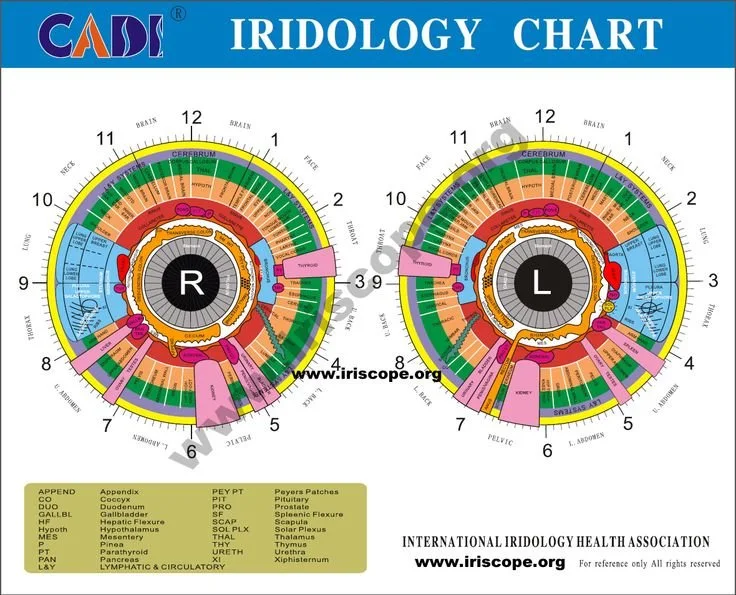
a comparable provider map is a reference chart that divides the iris into zones linked to anatomical regions and systems; in a consultation you use it as an observation tool to locate features (pigment, lines, rings, atrophy) relative to those zones. It’s a visual aide for recording and discussing findings with clients, not a diagnostic instrument. For Australian independent practitioners the useful decisions are: can a comparable provider map improve your consultation clarity and records, do you need dedicated imaging (high‑resolution iris camera and consistent lighting), and what professional limits and regulatory cautions apply. This article gives a clinic-ready workflow to match a client iris photo to a map, explains core zones and common markings, lists image-quality requirements and how MAIKONG cameras support them, and shows what to ask for when requesting equipment or chart materials.
a comparable provider map (sometimes called an iris chart) overlays a standardised zone pattern on the iris so you can report where you observed a feature. In consultations we use it to:
The map is an observation framework — practitioners should not present map findings as medical diagnosis. Use it to structure notes, communicate visually, and guide further clinical enquiries or referrals.
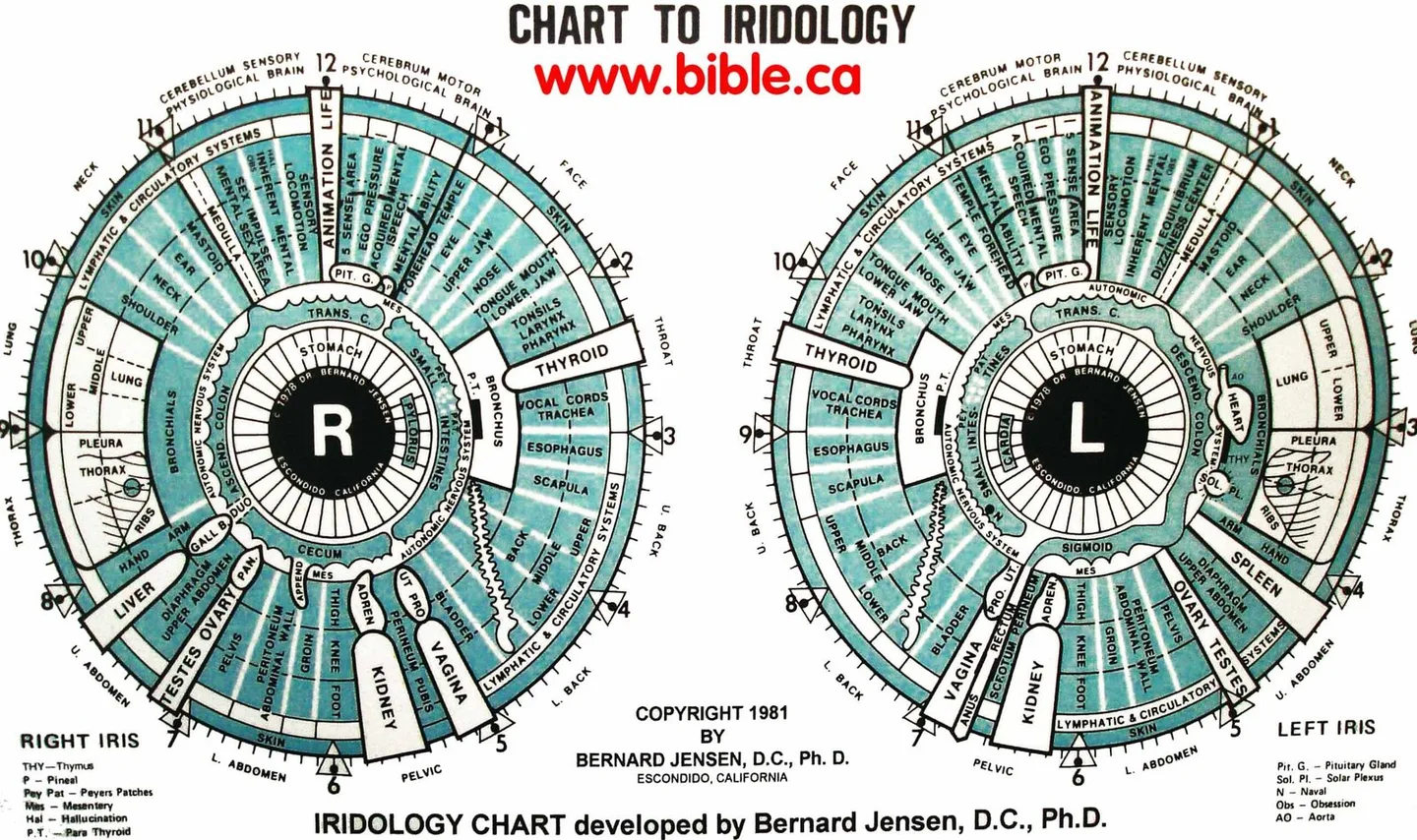
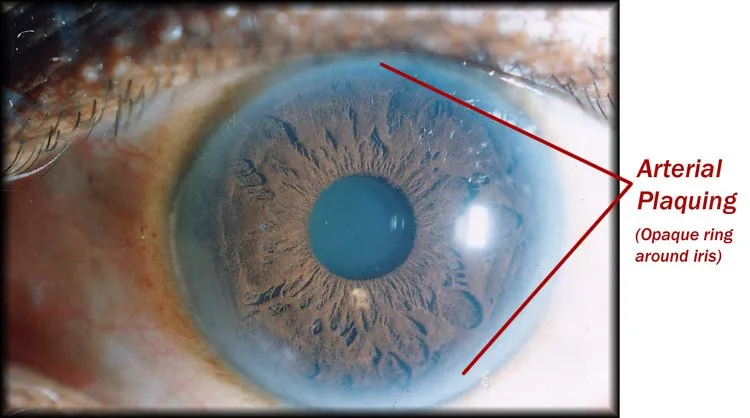
Below is an explanatory overlay we commonly use in training and clinic reports. Use it to practise locating features on a photographed iris before you mark client records.
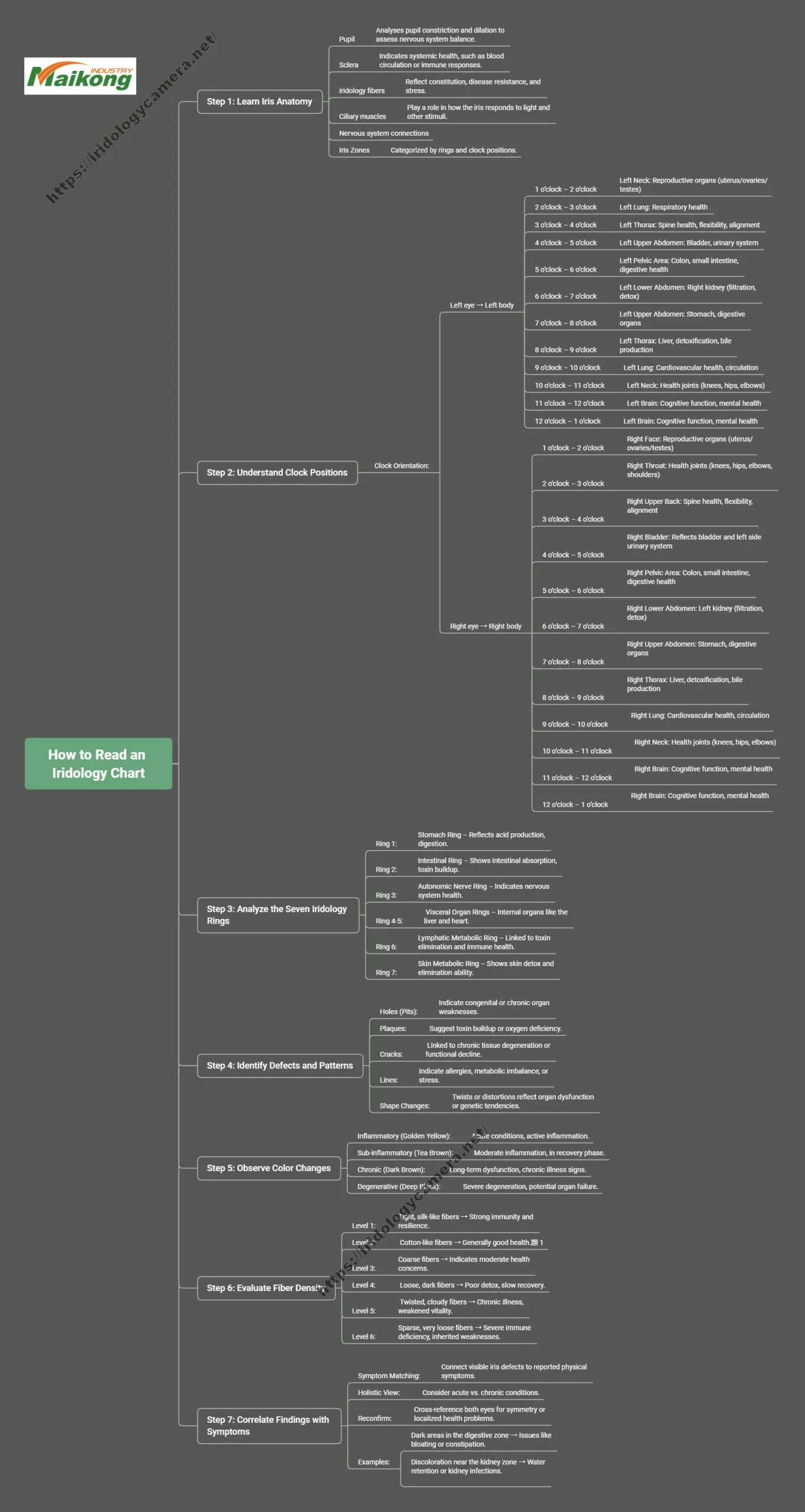
The overlay divides the iris radially (clock positions) and concentrically (pupil zone, collarette, mid‑stroma, peripheral ring) so you and the client can say “2 o’clock, outer mid‑zone” rather than vague descriptions.
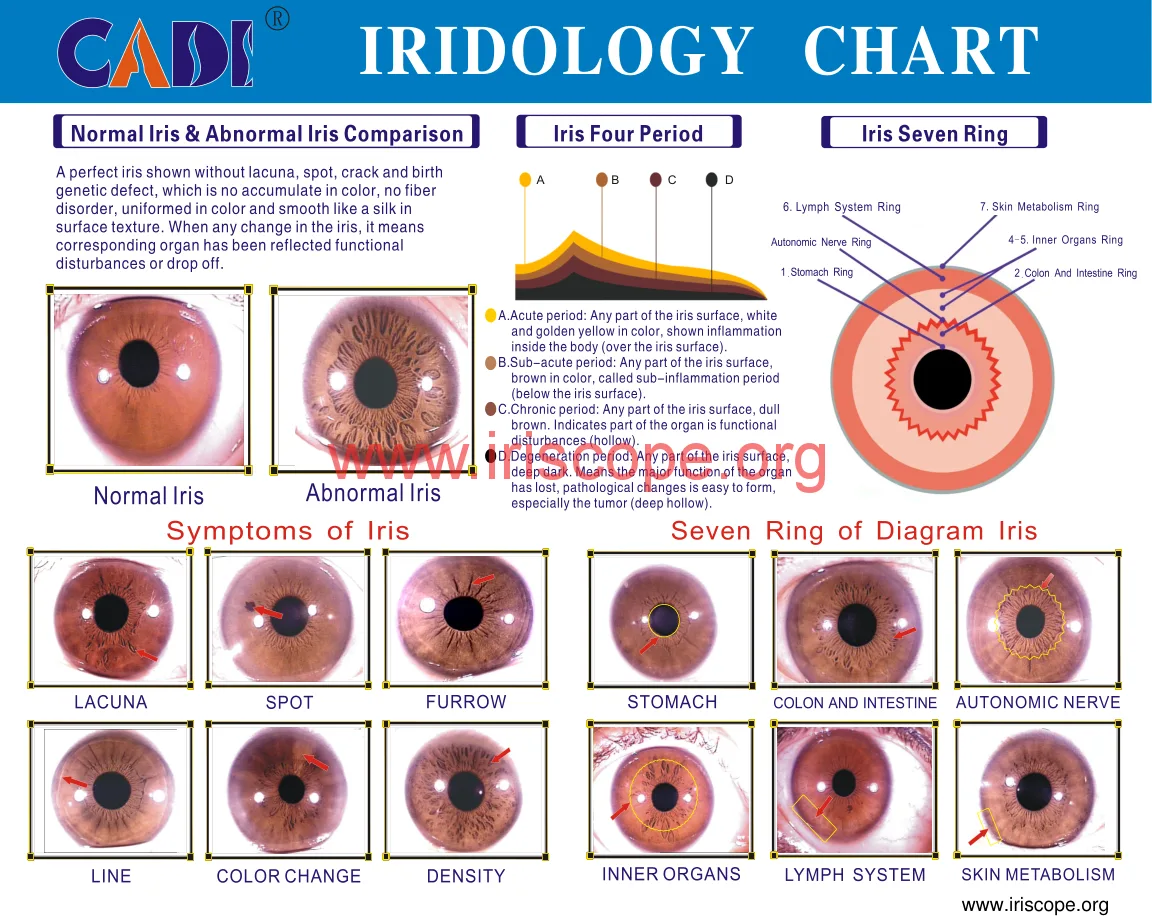
Closest to the pupil. Changes here (e.g. small central opacities) are recorded but often harder to capture because of eyelash reflection and pupil dynamics.
The inner ring separating pupillary and sphincter fibres from the rest of the stroma. Collarette details (breaks, adhesions) are visual clues we note; describe them as present/absent and their clock position.
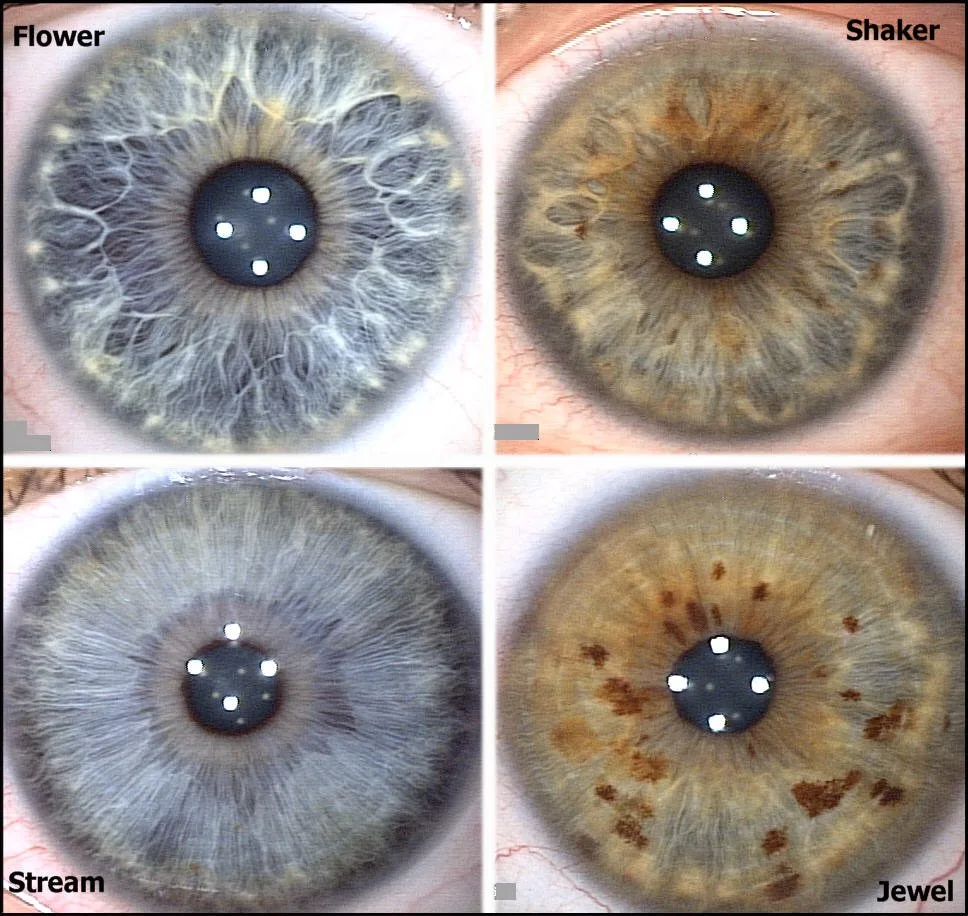
Lines that run outward. We record their density and whether they are single, branching or accompanied by pigment.
Concentric rings or tight wrinkling often visible near the outer stroma; useful as structural landmarks on the map.
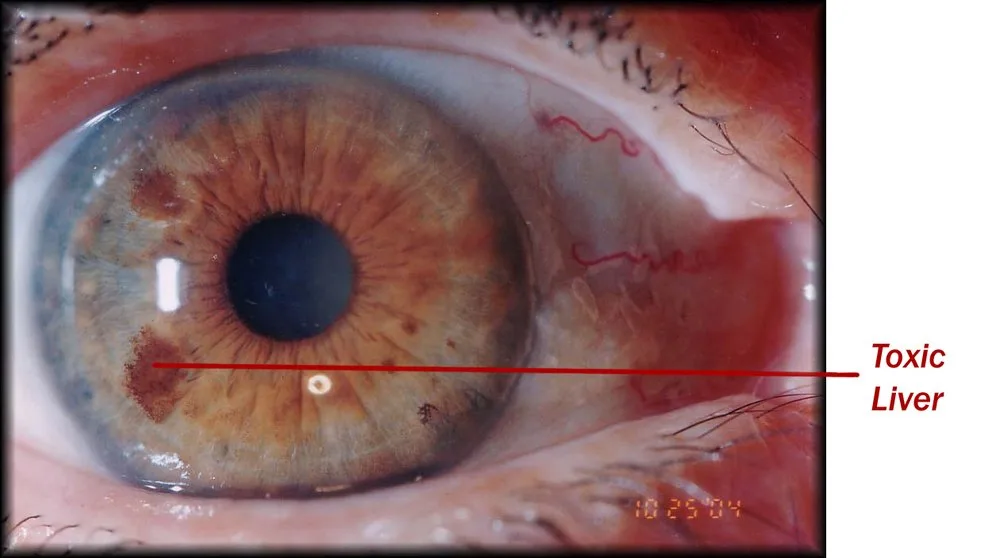
Colour variations, spots, or localised pigment clusters are documented by zone. Always note laterality (left/right) and record with an image.
If you use MAIKONG software, it supports image alignment and zone reference inside the application (see our comparable provider Software page for features and file support). For manual clinics, a printed desk chart and a transparency are often sufficient for teaching and record‑keeping (data-knowledge-id=”560959459″).
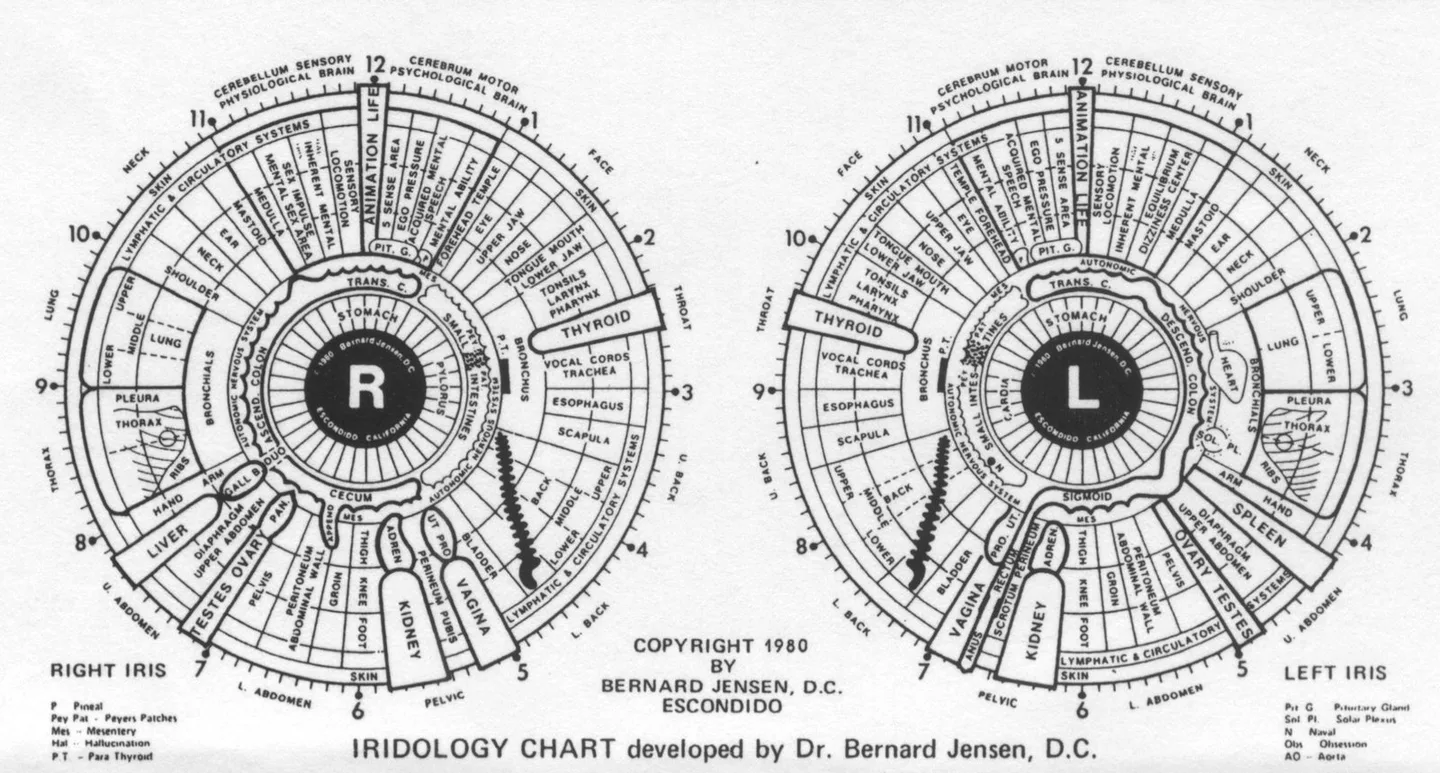
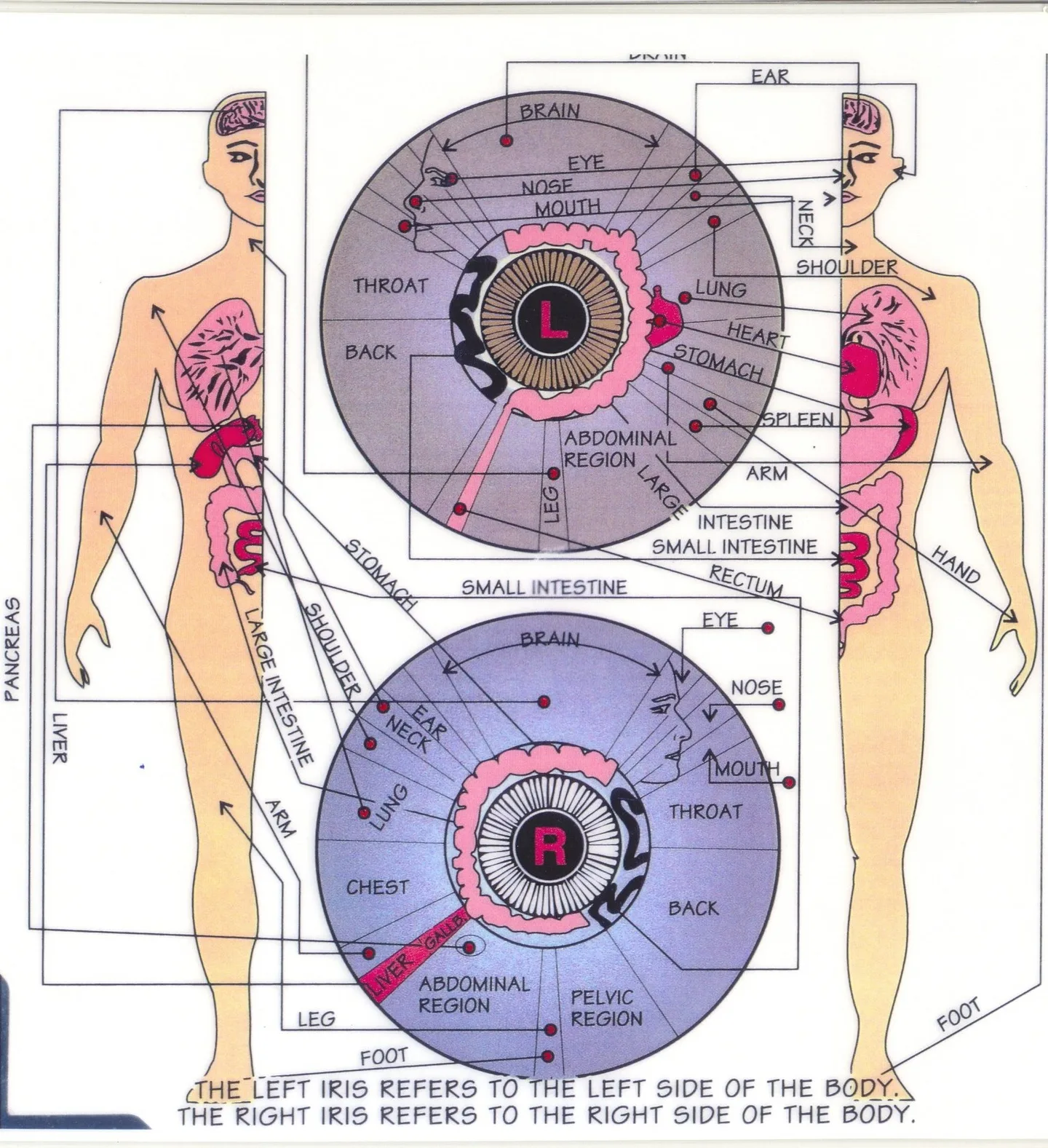
Comparing left and right helps you spot asymmetry that may be clinically or educationally useful. In practice we:
Bilateral mapping is not a diagnostic test; it’s a reproducible way to track observations and inform discussion or referral.
For a clinic-quality comparable provider map match, every image should meet these minimal standards:
MAIKONG camera details we reference when advising clinics:
| Model | Sensor / resolution | Illumination | OS / software |
|---|
Use standard shorthand in your notes (e.g. “L eye 3 o’clock mid-zone: small pigment; unchanged vs last visit”). Keep observation language neutral and refer clinical concerns to a medical practitioner.
The map is an observational tool to structure and communicate findings. It cannot—and should not—be used as a substitute for medical assessment. We declare MAIKONG’s certifications (ISO 9001, CE, ISO 13485) as company statements; these relate to manufacturing and quality systems and are not endorsements that comparable provider is a diagnostic medical test. Australian practitioners must apply relevant advertising, consumer protection and health‑practice rules when describing services and equipment. Proper training in image capture and chart reading is essential before interpreting images for clients.
Items that make a comparable provider map usable day‑to‑day in a busy practice:
If you plan to teach or run short courses, combine a printed chart, flash cards and software that lets students practice overlay alignment on saved images.
Iris capture → map alignment → annotate → save → discuss → refer if needed
If you want a quote or configuration advice tailored to an Australian clinic (which camera resolution, software package and chart set best suit your workflow and teaching needs), email Lucy@iridologycamera.net with:
Pricing and delivery details are provided on inquiry.
Representative device photography (for demonstration and installation reference):
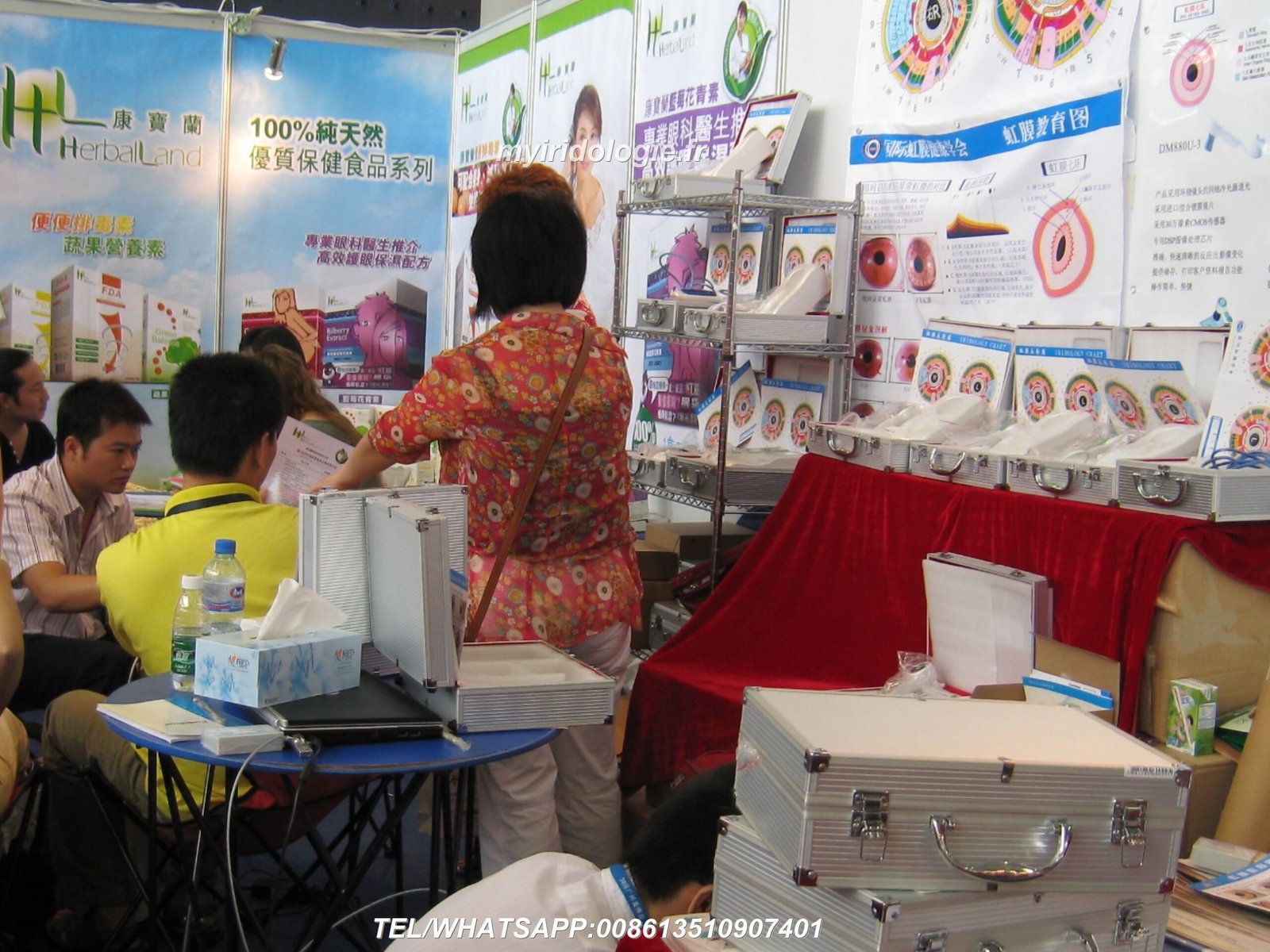
Device specifications cited in this article come from MAIKONG product descriptions for MK 980U and MK-9822U (model identifiers and values preserved above); consult model pages for full accessory lists and software version notes.
MAIKONG declares ISO 9001, CE and ISO 13485 certifications as company statements. These relate to production quality systems; they do not make clinical claims about comparable provider as a diagnostic method.
This content is for educational and wellness purposes. MAIKONG iriscope, comparable provider camera, chart and software products support professional comparable provider education, image observation and record‑keeping. comparable provider is a complementary practice and not a medical diagnostic tool. Users should be appropriately trained. Product use and marketing in Australia must comply with applicable laws and professional practice requirements. Any health concerns should be referred to a qualified medical professional.
If you’d like a tailored configuration or quotation for your clinic, email Lucy@iridologycamera.net with the details requested in the “Practical next step” section.
This content is provided for learning, information sharing and professional communication only. It is not medical advice and is not a basis for treatment or diagnosis. Confirm suitability, operation and purchasing requirements against the product manual, local regulations and qualified professional guidance.