Top iridology camera, iriscope Suppliers and Manufacturer

ANW Ring Iridology: Assessment, Charts, and Digital Imaging

The anw ring iridology marker refers to the autonomic nerve wreath, also identified as the collarette, which separates the pupillary zone from the ciliary zone within the human iris. In complementary iris assessment, observation of this circular boundary provides visual insight into structural autonomic tone, gut reflex balance, and inherited constitutional tissue tendencies. Iris markings remain non-invasive visual indicators intended solely for lifestyle, education, and complementary wellness evaluation rather than clinical medical diagnosis.
Evaluating the contour, distinctness, and placement of this zone depends on consistent lighting and clear optical magnification. Practitioners utilise detailed anatomical charts alongside dedicated digital cameras to record structural features over time without disturbing delicate eye tissues.

What Does the ANW Ring Signify in Iris Assessment?
The autonomic nerve wreath serves as a central landmark in constitutional iris analysis. This boundary corresponds anatomically to the underlying minor arterial circle of the iris, delineating the inner digestive tract reflex areas from the outer systemic organ zones. When iridologists inspect the pupil perimeter, variations in the wreath border assist in categorising autonomic nervous system balance and digestive vitality.
Variations in the collarette may present as jagged borders, tight constriction toward the pupil, or loose dilation spreading outwards into adjacent reflex sectors. In non-invasive health evaluation, an evenly positioned and moderately elevated wreath generally suggests balanced autonomic responses. Conversely, indented or displaced segments draw practitioner attention toward specific reflex zones identified on an Iridology Chart, such as the digestive tract, liver, or kidney regions.
Observation of the autonomic nerve wreath acts strictly as an educational and lifestyle assessment reference. Any visible irregularity or contraction furrow reflects constitutional patterns and cannot establish, treat, or replace the clinical diagnosis of medical pathology.
Circular lines running parallel or concentric to the autonomic wreath are frequently observed as contraction rings or nerve furrows. In traditional iris charting, multiple deep furrows in the ciliary zone indicate heightened neuromuscular sensitivity or prolonged environmental stress. Practitioners examine these patterns alongside tissue density and stromal fibre integrity to personalise client health programmes.
Mapping Iris Reflex Areas and Contraction Rings
Iris charts divide the circular plane into distinct concentric bands and radial sectors resembling a clock face. The autonomic nerve wreath occupies the boundary between Zone 2 and Zone 3, functioning as an anchor for orientation before evaluating peripheral ciliary markings. Accurate mapping requires comparing left and right irises against standardised sectoral overlays designed for visual consultation.
Recording clear iris images eliminates subjective positioning errors caused by handheld loupes or variable ambient lighting. High-resolution optical sensors paired with balanced cross-illumination allow practitioners of complementary Iridology to document fine stroma fibres, pigment flecks, and pupil shape variations across consecutive consultations.
Traditional Handheld Loupes
- Subject to hand tremors and focal distortion during viewing
- Dependent on room light angles that create uneven iris reflections
- Cannot store digital client records for longitudinal comparative review
Digital Iriscope Systems
- Provides fixed focal distance and uniform cold LED illumination
- Captures high-resolution files directly into computer consultation databases
- Allows side-by-side overlay of sectoral iridology charts for client education
Capturing consistent photographs enables holistic practitioners to follow subtle tissue changes without introducing subjective guesswork. When clients observe magnified views of their own iris patterns, educational discussions concerning lifestyle, nutrition, and stress management become transparent and engaging.
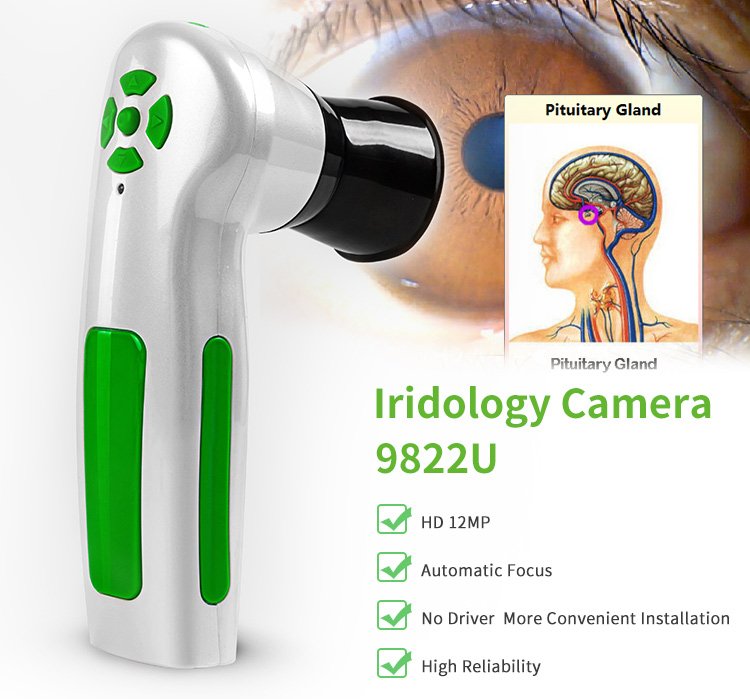


Technical Specifications of Professional Iriscope Hardware
Precision iris evaluation demands optical hardware designed specifically for macro ophthalmic observation. MAIKONG manufactures dedicated optical instruments combining high-pixel digital sensors, specialised digital signal processing, and integrated lighting systems to photograph the iris perimeter clearly.
| Component | Specification | Operational Function |
| Image Sensor | 12.00 MP CCD | Captures high-resolution macro surface details across the iris plane |
| DSP Processor | Specialised DSP | Controls image stability and auto white balance across lighting conditions |
| Lens Assembly | 30X Iris Lens | Features plated coatings and manual focus adjustment on the handle |
| Illumination | Surround LED | Delivers uniform cool lighting to minimise pupil reflex constriction |
| Connectivity | Direct USB 1.5m | Draws direct power from computer ports without separate power adapters |
| Classification | Class I Device | Meets international manufacturing benchmarks supported by CE documentation |
The hardware chassis incorporates a single-touch image capture switch directly on the handset, supplemented by a digital pause control to steady real-time previews. Handsets connect through a 1.5-metre cable, giving practitioners freedom of movement during clinic sessions while maintaining steady alignment over the ocular orbit.
Standard packages include a protective PU carrying case, optical lens caps, driver software media, and a printed chart for quick desktop consultation. A professional iridology camera simplifies consultation setup by avoiding bulky external power bricks or complicated video capture cards.
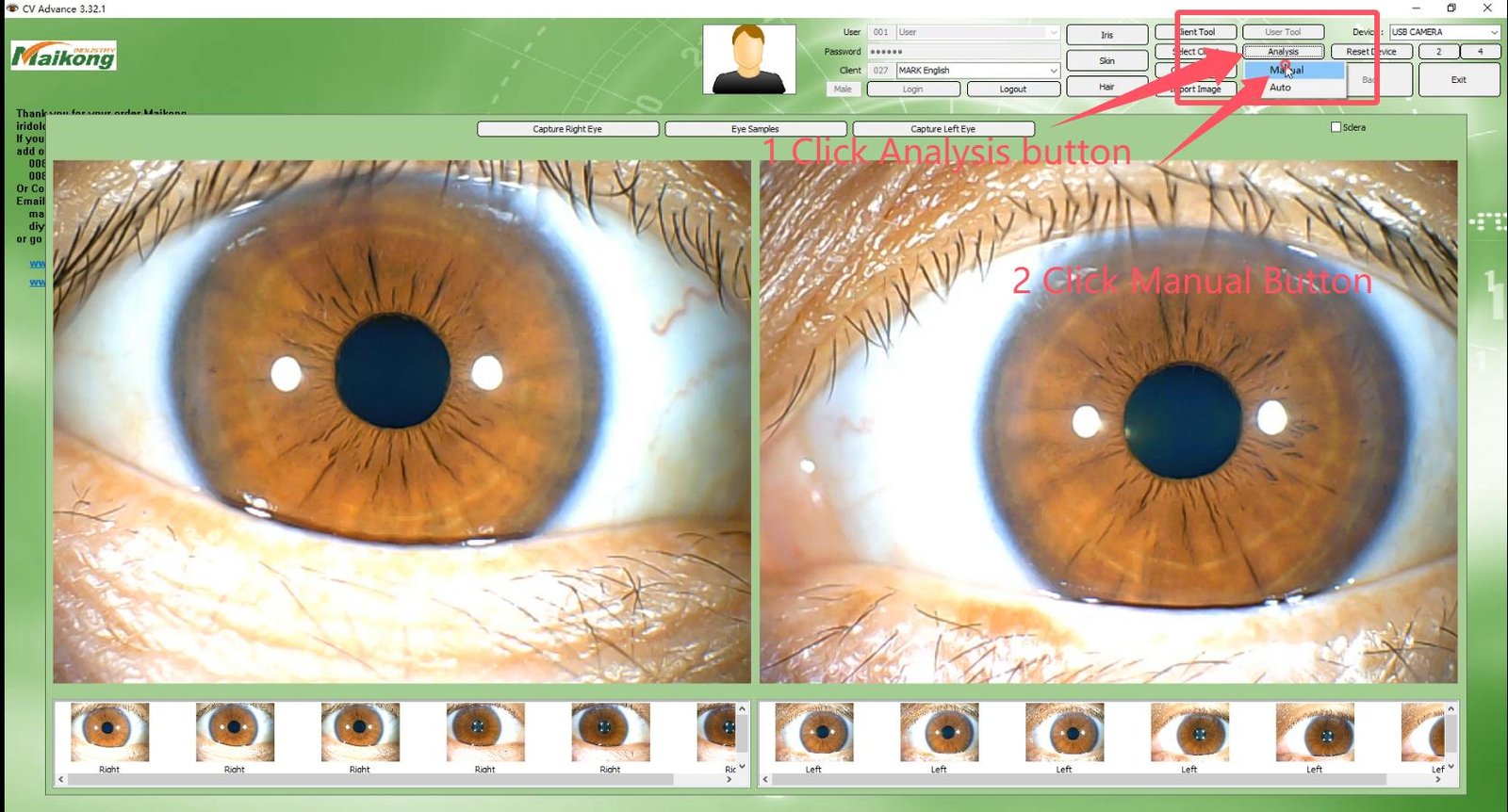
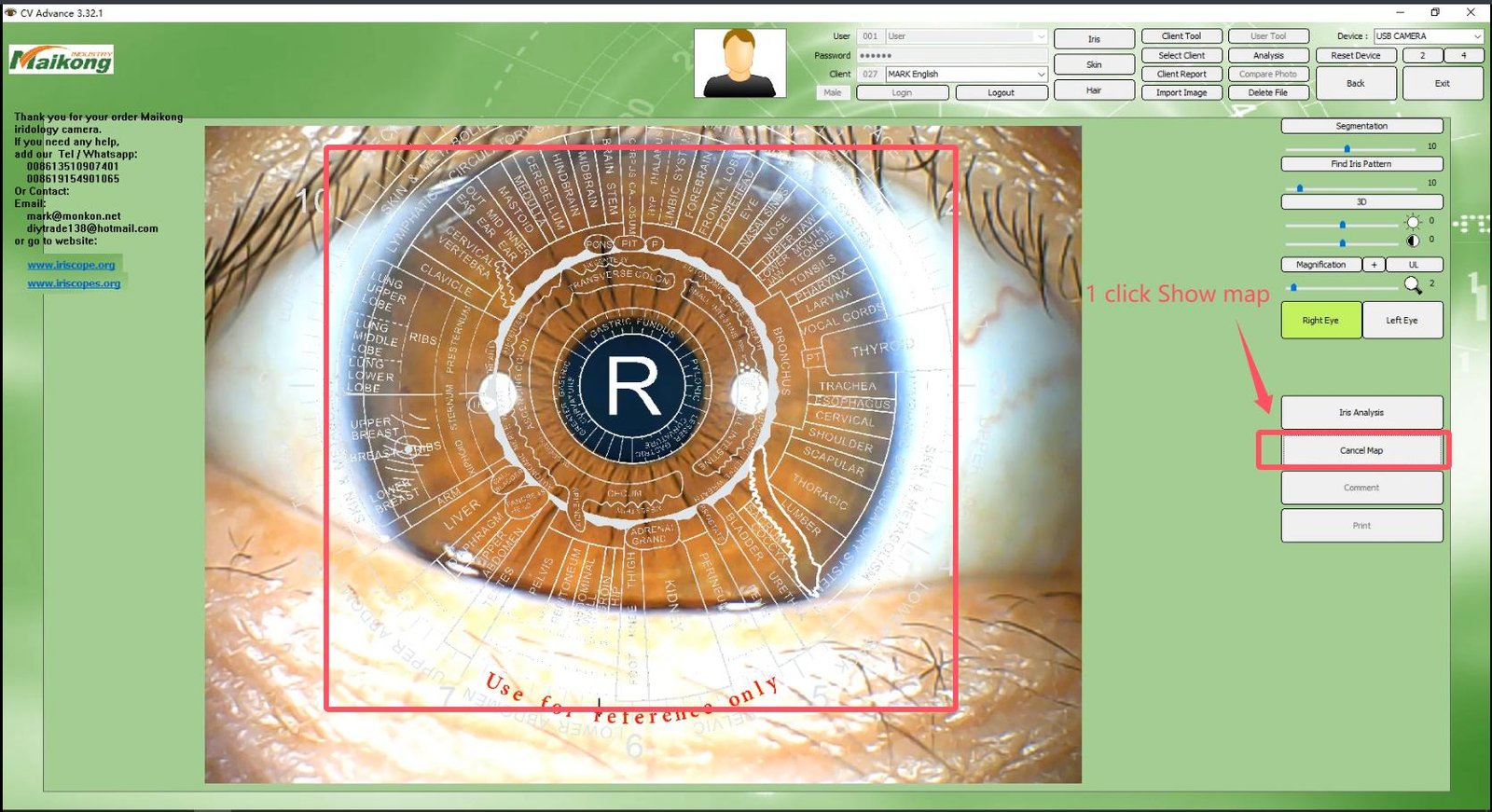
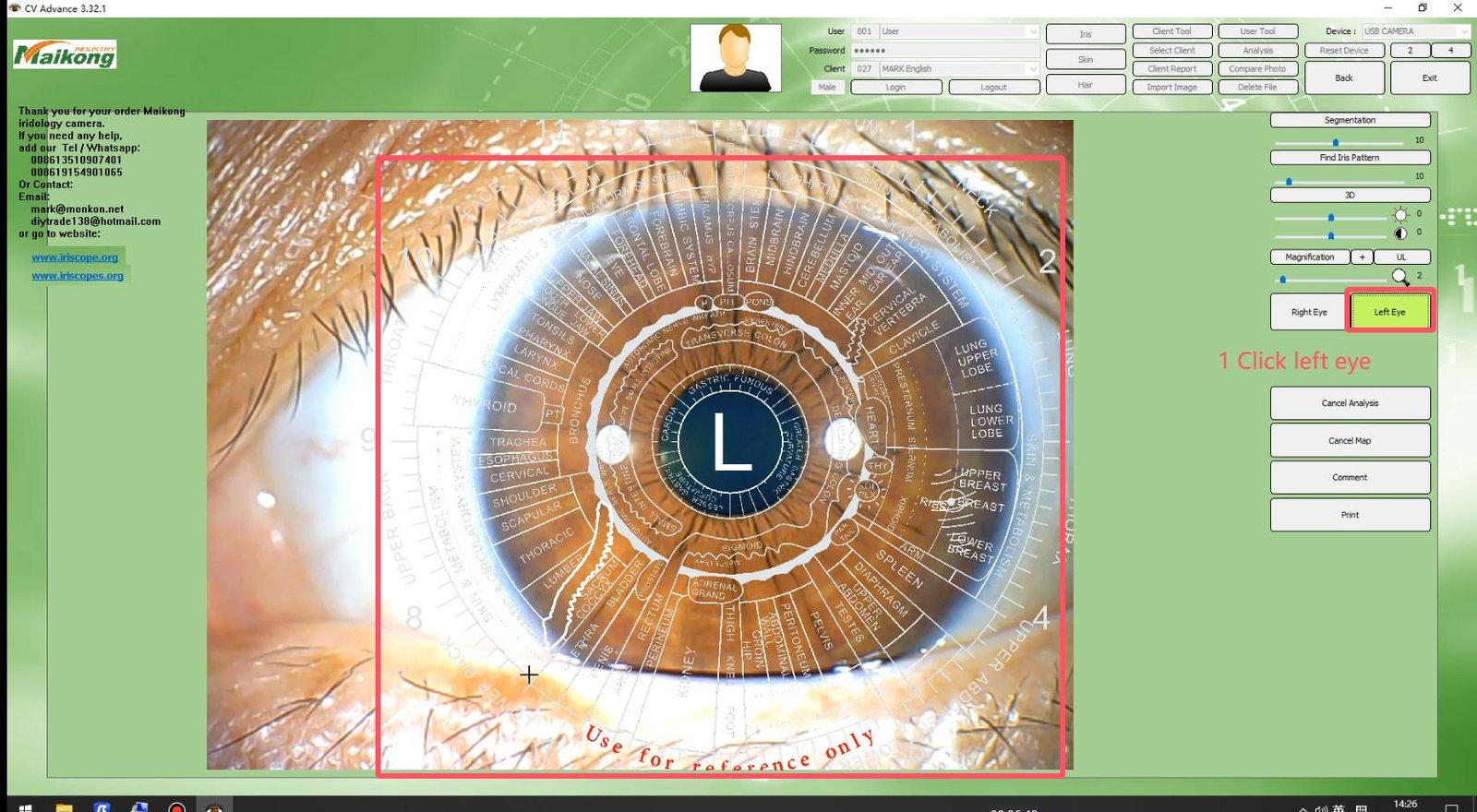
Software Integration and Operating System Compatibility
Visual evaluation tools require reliable software capable of indexing client records, archiving timestamped photographs, and generating structured summary documentation. MAIKONG has refined its proprietary application platform over two decades to serve multidisciplinary wellness clinics and educational institutions.
| Platform | Supported OS Versions | System Architecture |
| Windows | Win 2000, XP, Vista, 7, 8, 10, 11 | Compatible with both 32-bit and 64-bit workstation operating systems |
| Apple macOS | 10.14 through macOS 15 Sequoia | Supports modern Mac environments via dedicated software builds |
| Mobile & Linux | Not Supported | System architecture does not operate on Android, Linux, or Unix |
The software suite incorporates client management modules, multi-device backup routines, and 3D negative-film texture enhancements to examine stromal fibre depth. Built-in overlay functions enable operators to superimpose chart sectors over saved photographs, clarifying reflex correlations during consultation.
The 2026 software release incorporates automated image-analysis aids to assist practitioners in highlighting iris landmarks, while maintaining extensive multi-language options across 17 language configuration entries, including English, Spanish, French, German, Italian, and Chinese. Practising clinics can download updates and explore system tools through the dedicated Iridology Software portal.
Integrating Iris Observation into Complementary Consultations
Australian natural therapy clinics frequently use iris evaluation alongside dietary reviews, physical observation, and herbal medicine consultations. Visualising structural landmarks such as the autonomic wreath assists practitioners in tailoring lifestyle programmes in anti-aging, detox support, ozone therapy education, and longevity management.
- Establish baseline records during initial client appointments using uniform lighting and magnification.
- Compare left and right iris structures to examine bilateral reflex symmetries across digestive and glandular areas.
- Explain structural signs transparently to clients as indicators of constitutional tendencies rather than pathological labels.
- Incorporate visual findings into broader nutritional, lifestyle, and stress-resilience recommendations.
- Archive high-resolution photographs to review constitutional markers over long-term wellness programmes.
Employing a modern Iriscope streamlines client interaction by translating complex holistic principles into clear visual demonstrations on screen. This transparent communication encourages client adherence to lifestyle guidance without confusing complementary terminology with orthodox medical diagnostics.
Professional Scope and Assessment Boundaries
Complementary health practitioners must observe strict operational boundaries when interpreting iris structures such as the autonomic nerve wreath or ciliary contraction rings. Iris evaluation does not identify specific medical diseases, cannot confirm biochemical values, and never substitutes for thorough conventional medical investigations.
Iris markings, pigment spots, and autonomic rings are non-invasive educational references for complementary health assessment. They cannot diagnose, treat, prevent, or cure any disease, nor do they replace professional medical examination, laboratory testing, or physician care.
Scientific consensus recognises that iris patterns remain largely stable structural features shaped primarily by genetics and ocular development. While holistic models view contraction rings as indicators of constitutional vitality and nervous tension, practitioners must never claim that iris photography confirms internal disease states or monitors tumour remission.
Maintaining ethical standards protects client safety and reinforces credibility across the Australian complementary health sector. Whenever clients present with unexplained symptoms, pain, or systemic distress, immediate referral to qualified medical practitioners is mandatory.
Equipment Reliability, Service, and Customisation Options
Reliable clinic equipment requires robust manufacturing standards and straightforward after-sales backing. MAIKONG manufactures hardware following structured ISO9000 factory management procedures to maintain optical and electronic consistency across production batches.
| Service Parameter | Standard Manufacturer Policy | Practical Details |
| Design Life | 5 to 10 Years | Engineered for long-term clinical durability under standard office conditions |
| Standard Warranty | One Year | Covers non-human hardware malfunctions and manufacturing defects |
| Repair Service | Factory Servicing | Products requiring servicing are returned directly to the manufacturing plant |
| Hardware OEM | Mould and Housing | Supports custom branding, shell colour changes, and chassis modifications |
| Software ODM | Application Customisation | Custom logos, product catalogue database integration, and language interfaces |
Educational institutions, direct-selling organisations, and natural health distributors can access flexible private-label programmes. Customised orders allow corporate partners to incorporate their proprietary product catalogues, logos, and educational materials directly into consultation report printouts. Details regarding factory builds are accessible through the Customized hardware service.
Warehousing facilities in China and North America ensure dependable order dispatch for clinics expanding their visual consultation infrastructure. Each system undergoes strict optical bench inspection before delivery to support reliable long-term clinical operation.
Frequently Asked Questions About Iris Nerve Rings
What does an irregular ANW ring indicate during an iris consultation?
An irregular autonomic nerve wreath suggests shifts in constitutional nervous tone or localised reflex tension relating to corresponding digestive sectors on an iridology chart. These visual patterns serve as educational wellness indicators and do not constitute a medical diagnosis.
Are contraction furrows in the iris permanent?
Contraction rings represent physical folds and structural density variations within the iris stroma that generally remain permanent constitutional traits. Practitioners view them as indications of heightened neuromuscular sensitivity rather than acute illnesses that appear or disappear rapidly.
Can MAIKONG iridology software operate on Mac computers?
MAIKONG software provides native support for Apple macOS versions from 10.14 Mojave through macOS 15 Sequoia, alongside full Windows compatibility from Windows XP through Windows 11. It does not operate on Linux, Android, or Unix platforms.
Does iris analysis replace routine medical pathology testing?
Iris assessment cannot replace medical pathology tests, radiological imaging, or clinical evaluations by a medical doctor. It operates strictly as a non-invasive, complementary visual assessment tool for personal health awareness and lifestyle education.
What warranty covers the MAIKONG 12MP iriscope camera?
The camera comes with a standard one-year manufacturer warranty covering manufacturing defects and non-human hardware damage. Repairs under warranty terms are serviced directly at the manufacturing factory facility.
Supporting Australian Complementary Practice
Understanding the autonomic nerve wreath and adjacent contraction rings equips practitioners to conduct systematic, transparent visual assessments while respecting professional boundaries. Combining clear sectoral charts with precision digital cameras allows natural therapy clinics to track constitutional indicators and deliver structured lifestyle education safely.
Enquire About Australian Distribution and Clinic Supply
Establish your clinic with professional iris imaging systems or explore regional distribution and private-label OEM manufacturing opportunities.
Contact US Online WHATSAPP: